Friday, January 28, 2011

Salters

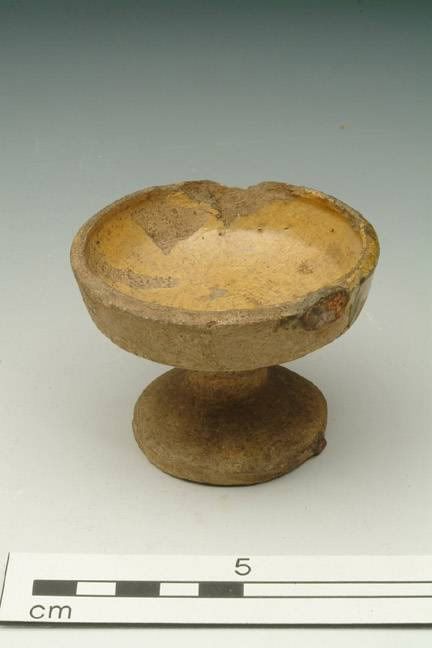
Salt was an important seasoning throughout period. In my series "for the kitchen" here is an example of an item that was just for keeping salt safe on the table. Thought, it doesn't really look like the safest place to keep salt.

Accession number: 5904
Collection place: Surrey/Hampshire border
Production date: 1551-1700
Material: ceramic; earthenware
Measurements: H 61 mm
Museum Section: Post-Medieval
Summary: Surrey/Hampshire border ware salt with a yellow glaze on the nowl and on underside of the bowl in places. There are kiln scars on the rim and some of the rim is chipped.
Location: Object stored at Mortimer Wheeler House (Ceramics and Glass store)
Sub-category: Surrey/Hampshire border ware.


Here is another one for good measure.

Accession number: 83.463/25
Collection place: Surrey/Hampshire border
Production date: 1567-1633
Material: ceramic; earthenware
Measurements: H 58 mm; D (base) 54 mm; (rim - incom) 85 mm appro
Museum Section: Post-Medieval
Summary: Surrey/Hampshire border ware pedestal dish with a green glaze on the outside. Part of the bowl is missing.
Location: Object stored at Mortimer Wheeler House (Ceramics and Glass store)
Sub-category: Surrey/Hampshire border ware.
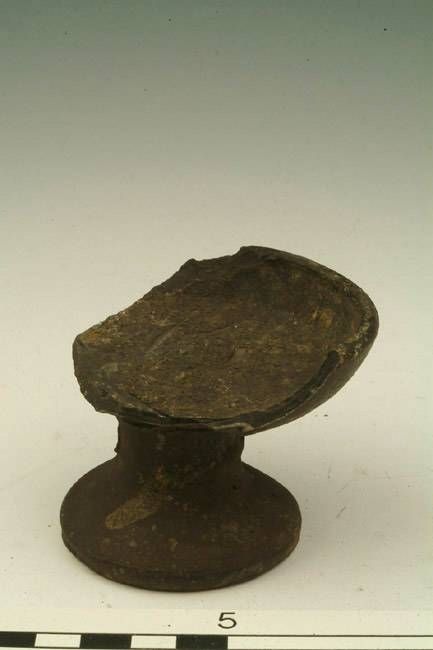


From the broken one, you can see more how it is shaped and works more.

Labels: , , , ,

Sunday, January 02, 2011

More kitchen essecentials

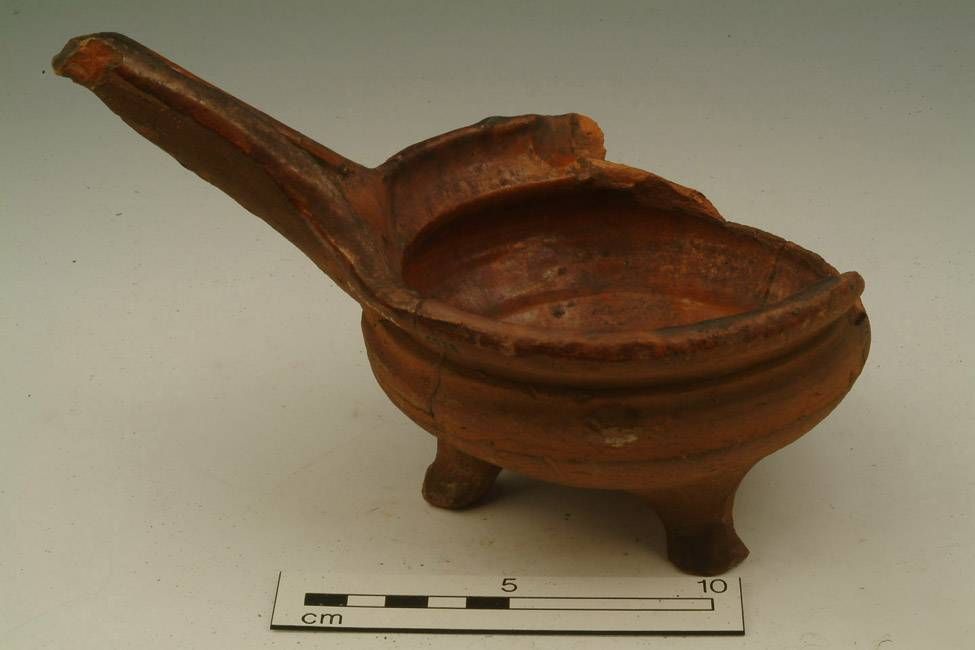
These are a little on the later period side for SCA members, however, like I mentioned in a previous post, storage vessels are an important part of the kitchen. A number of SCA participants want to make complete kitchens, so I figured I would try to make suggestions wherever I could.

Accession number: 5933
Collection place: Surrey/Hampshire border
Production date: 1550-1700
Material: ceramic; earthenware
Measurements: H 83 mm
Museum Section: Post-Medieval
Summary: Surrey/Hampshire border redware skillet with clear glaze internally and long, straight side handle; one side of the vessel is missing.
Location: Object stored at Mortimer Wheeler House (Ceramics and Glass store)
Sub-category: Surrey/Hampshire border ware.

Labels: , , ,

Wednesday, December 15, 2010

Pipkins and Late Medieval cooking

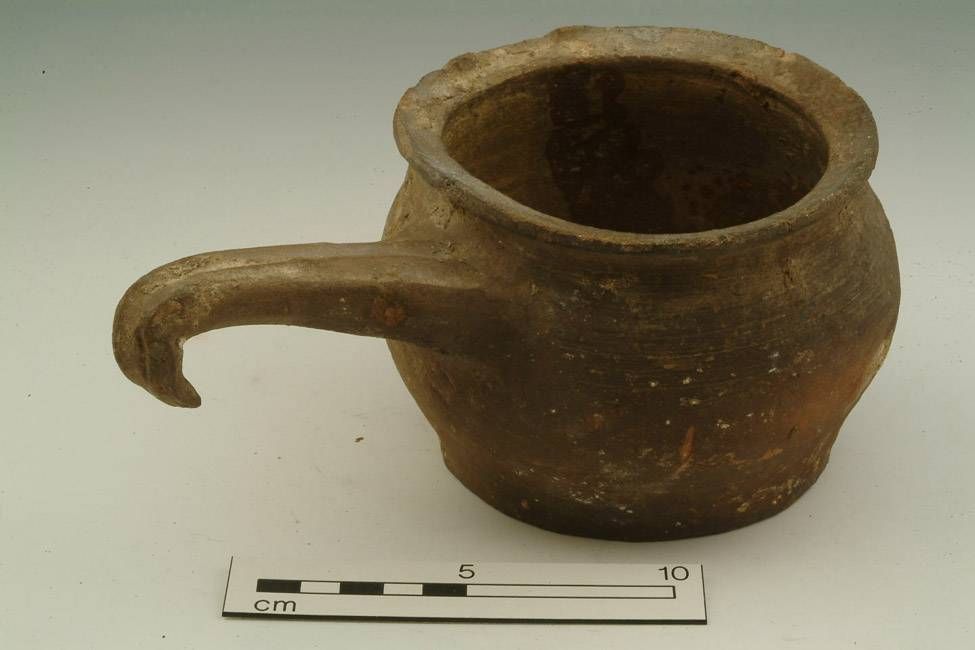
While being a potter and being in the SCA, a number of people seem to want the "pipkin," however, I believe they may feel that the pipkin automatically comes with three "feet" or legs. Not the case.

In history, cook pots come in all shapes and sizes. The tripod pipkin, does indeed, comes with three legs (stands or short rods, if you will that are attached to the bottom of the pot, balancing the vessel). There are also skillets and a variety of pots for cooking as one could imagine looking at our cooking stores.

Here is a sample of a standard pipkin, with a pinched pouring lip and pulled handle.

Accession number: A20607
Collection place: London
Production date: Late Medieval; 15th century
Material: ceramic; earthenware
Measurements: H 97 mm; DM (rim) 132 mm; W (with handle) 207 mm.
Museum Section: Medieval
Summary: Complete Late London-type ware pipkin with pinched pouring lip, and thin, clear glaze inside and out.
Location: Object stored at Mortimer Wheeler House (Ceramics and Glass store)
Category: Medieval glazed ware.
Sub-category: London-type ware.

Labels: , , ,

Friday, November 26, 2010

What every Medieval kitchen needs: The Jug

The kitchen is more than cookpots. In a kitchen, one needs storage jars for all those ingredients to keep them dry. Colanders, mortar and pestles for crushing, bowls for mixing, and serving plates. There wasn't running water in the house (well, unless the roof was leaking, which is bad) so, having jugs to go gather water from the well or nearest water source was a good thing to have.

The jug was a multi-tasker. It not only brought water into the home for cooking, but it could also hold other liquids (ale, wine, broth, soups, etc) both hot and cold. One can also use it to fill a tub for the yearly bath (in some cultures) or help do the washing. Some people used jugs to drink directly from while others used as pitchers. Some had pinched spouts, while others didn't. And it isn't a surprise by it's versatility that there are so many jugs of so many sizes and shapes found in digs.

I'll be posting a number of Jugs to show a few examples in the future.

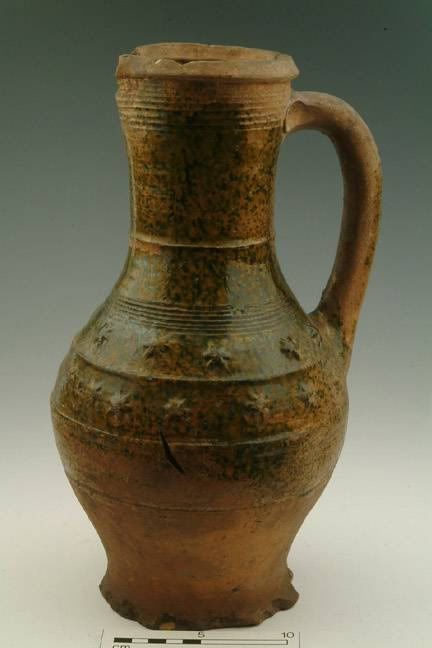
Accession number: A15259
Collection place: Hertfordshire
Production date: Late Medieval; mid 14th-mid 15th century
Material: ceramic; earthenware
Measurements: H 330 mm
Museum Section: Medieval
Summary: Late Medieval Hertfordshire Glazed ware baluster jug with green glaze, stabbed handle and stamped boss decoration in the form of stars.
Location: Object stored at Mortimer Wheeler House (Ceramics and Glass store)
Category: Medieval glazed ware.
Sub-category: Late Hertfordshire glazed ware.

Labels: , , , ,

Saturday, September 25, 2010

Pedestal lamps in Saxon-Norman England


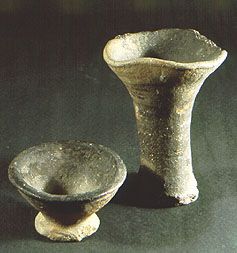
Pedestal Lamp
Saxo-Norman AD 850 - 1150

* Common name Early Medieval Oxford ware
* Class Pedestal lamps
* Height left, 56mm right, 145mm
* Identifier PW50
* Production centre a dispersed industry to the north west of Oxford
* Distribution local
* Use for lighting interiors
* Date 11th - 12th century AD
* Published in Jope, Jope & Rigold 1950, Fig 21 nos 3 and 2, 59
* Provenance found in 1894, one near the University church with pottery, skeletons and a Roman coin; the other from properties associated with wealthy merchants.

I'm always looking through websites for new things to make. I came across this "new" simple project off the Ashmolean Museum site. I find it interesting since it looks like a bowl or even an early version of the English beakers that came out much later. The more you look at pottery and really analyze the various forms, to more you can see similarities throughout the centuries. Sometimes you can see the influences between cultures as well (if there was trade between them, that is).

Labels: , , , , ,

Tuesday, September 16, 2008

Random Drinking Vessels

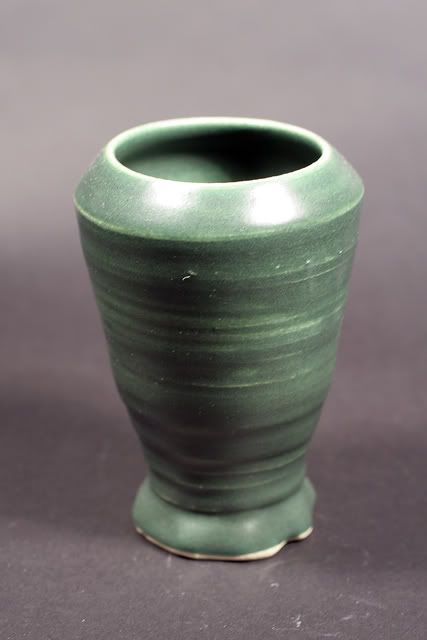
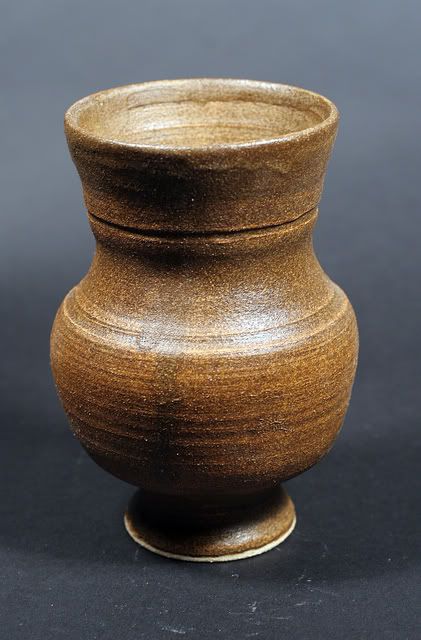
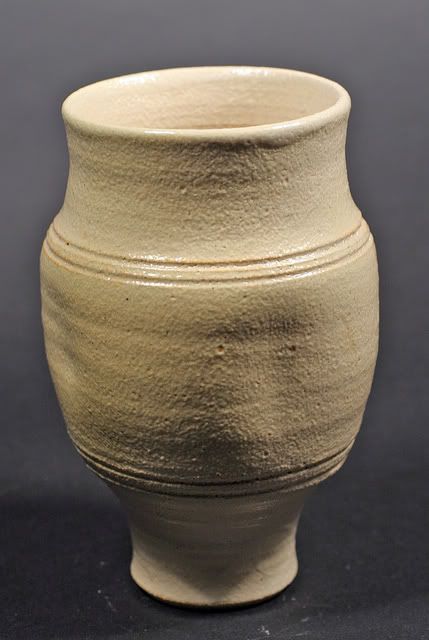
Trying to update for all my newer pots that I have been making the past six-ten months.


English Jug 14th Century


English 14th Century


Gaul 2-5th Century


Gaul 2-5th Century

The Gaul items I find a lot more interesting than the English and German pieces since I see a lot of Greek influence in them (plus they are fairly difficult for earlier pieces). Unless you are a potter, you wouldn't know that it's difficult to to manipulate the clay in several directions from narrow to bulbous and back to narrow again. Also, when you have a narrow base, it makes it difficult to throw that as well, then wide, then narrow, without distortion or collapse. Gravity plays a large part with throwing vessels and these guys have been somewhat tricker than their English or German counterparts.

I think that's why I like them. More of a challenge.

Labels: , , , , , ,

Friday, May 09, 2008

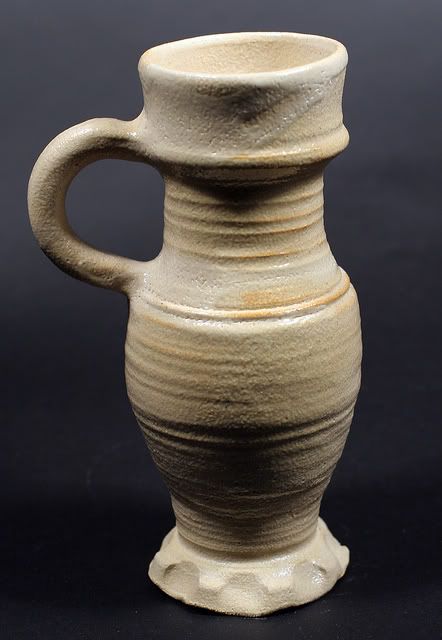
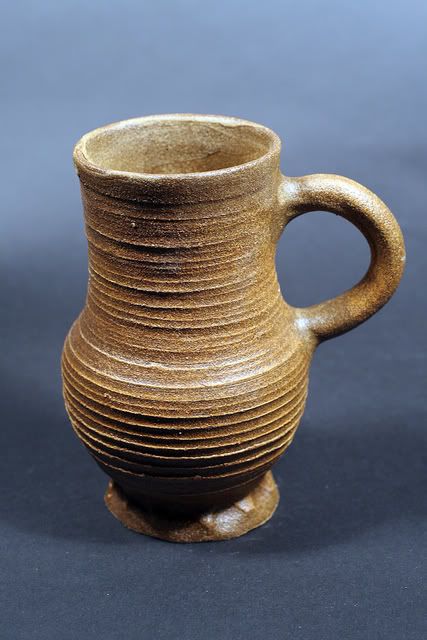
More English Jugs

Just a few more jugs...


Biconical jug


English jug which is VERY close to a German one. Remember how I said the English and German pots were very similar?

Labels: , , , ,

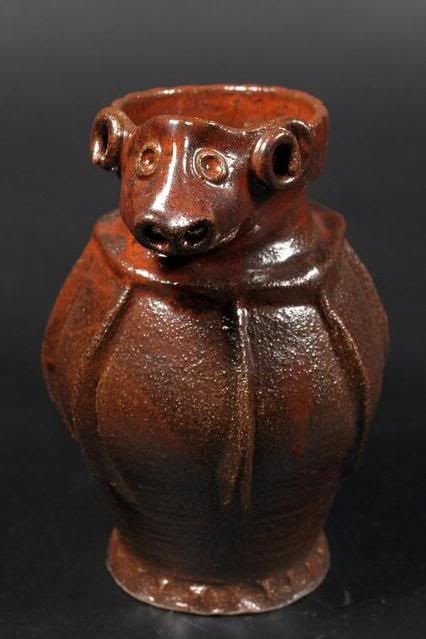
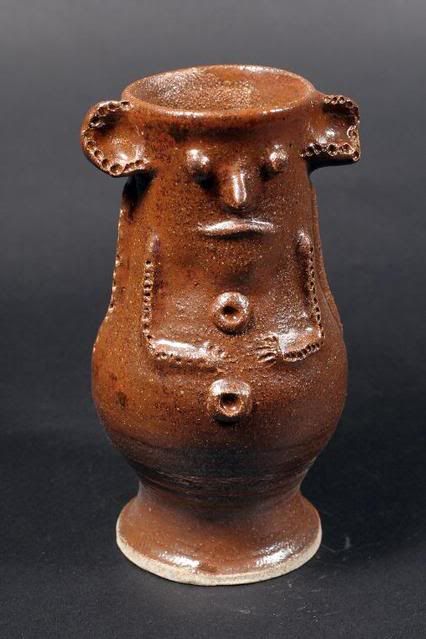
Animal and Human Faces in English Pottery

Sculpting animals and human faces onto pots has been going on since the dawn of time. It's not surprising to see it on pots from around the world.

Here are some 13th-14th century English examples of jugs that have anthropomorphic and human qualities to them.


Ram's Head jug.

There are holes in the nostrils so that liquid pours out through them. And yes, this is completely historically correct and disgusting at the same time. Think about Gothic gargoyles on Churches and you have the same principle. Jugs with mouths open, pitchers holding water in the form of animals called Aquamaniles, were used throughout the Middle Ages.


Gentleman Jug... heh.

I originally was going to name him man jug, but that sounded wrong. I don't know what he was called. I only have a cut out picture of him. I do believe he might have been a soldier, but this is a guess. There is a lot of clay manipulation on him, both attaching parts and pushing out to sculpt out his chin and cheeks.

These are just my more recent ones.

Labels: , , , , , , , , , , ,

Wednesday, May 07, 2008

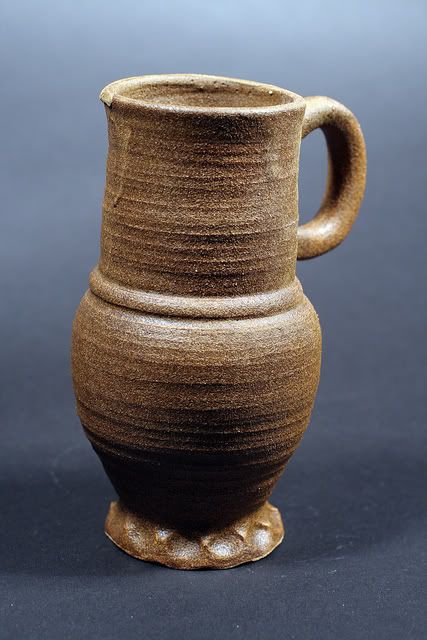
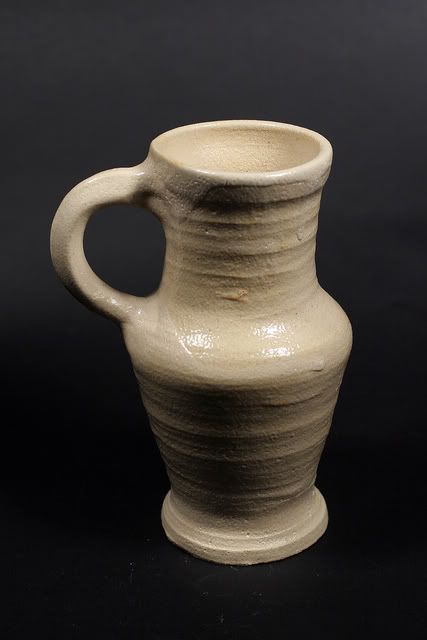
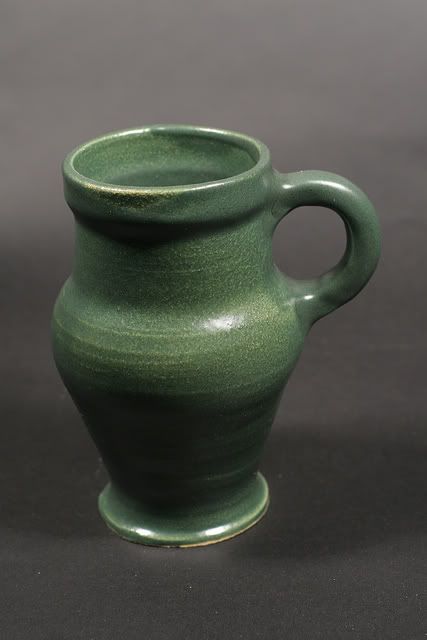
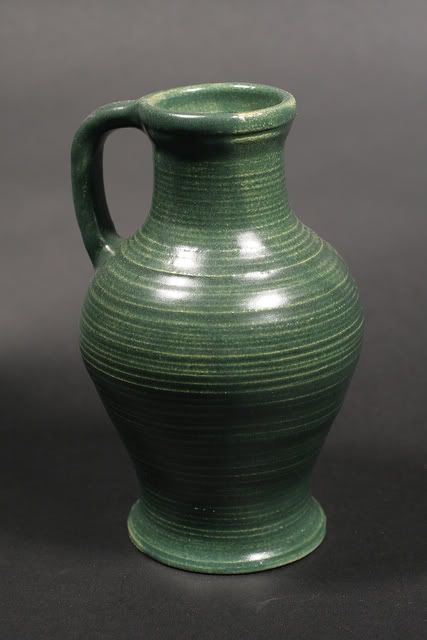
We have new pots! German & English!

I've been busy over the past few months. Mostly I have been updating several English and German forms that I have done in the past, but some of these are variations of forms that were used in the 1400-1600.

Also, I've re-calibrated my fake salt glazes and plan to drop my other glaze that I used to use. I will be tweaking this more for color choices, but I think it really has the texture and coverage now.


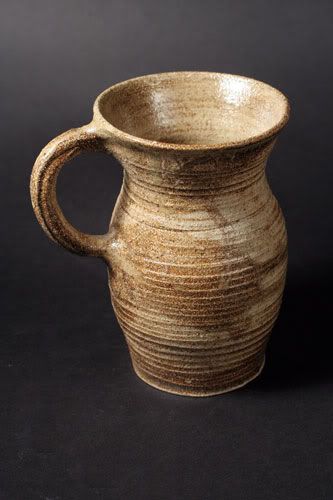
German jug


German Jug (different glaze)


German Jug


English Jug


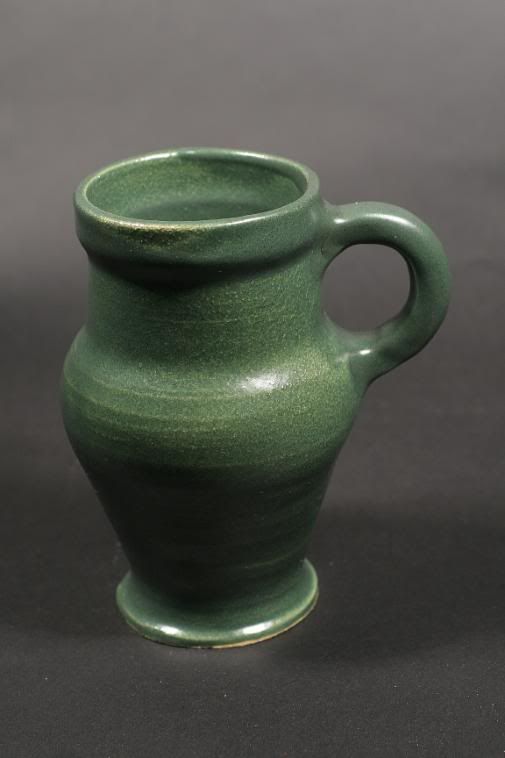
English Jug with my Tudor Green glaze


English jug, round belly, with Tudor Green glaze


Germann Beaker with Tudor Green glaze


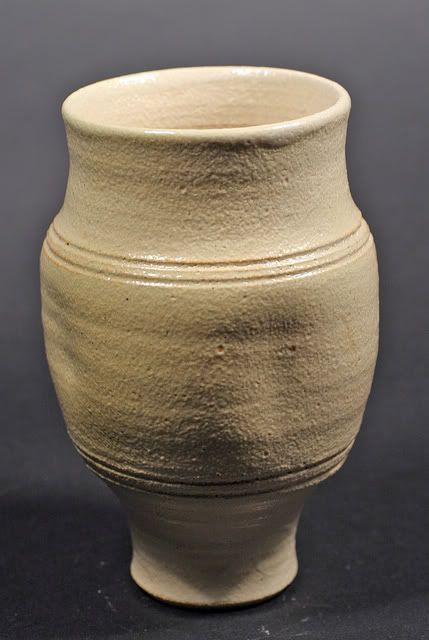
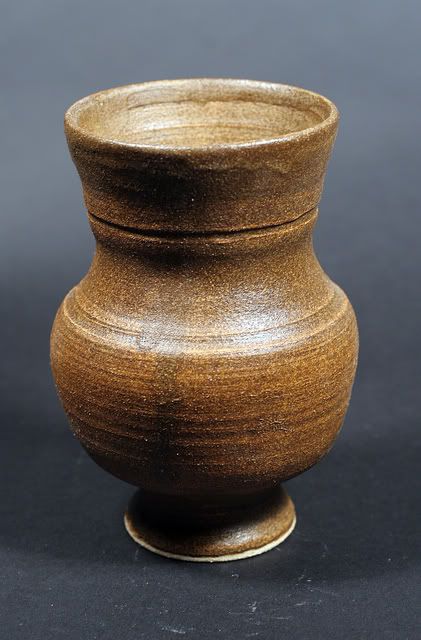
Gaul 5th -6th Century Drinking vessel with fake salt glaze (like second glaze), thrown porcelain


Gaul 5th-6th Century Drinking vessel with fake salt (first glaze)


Most of my work is done on high fire stoneware. All glazes are created by me, the chemistry by me and calibrations, all mine (no computers and I mix everything by hand). Glazes are fired in an electric kiln, which I fire as well.

All forms are researched by me and are accurate historically to the Museum of London site as well as several books.

Just trying to figure out better recreations in order to give the pieces to the Kingdom and Barony.

Labels: , , , ,


 TOP 

©2002-8 Mercy Neumark. All Rights Reserved.
No part of this website may be reproduced without express written permission of the author.
RakuRakuTei.com | P.O.Box 9957, Canoga Park, CA 91309 |
mercy@rakurakutei.com