Sunday, March 04, 2012

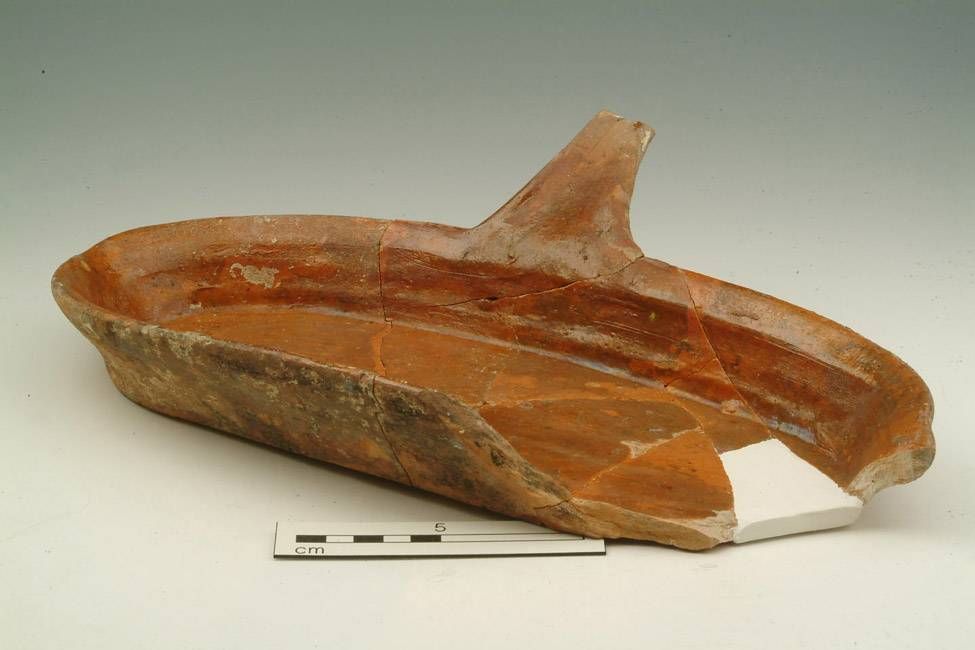
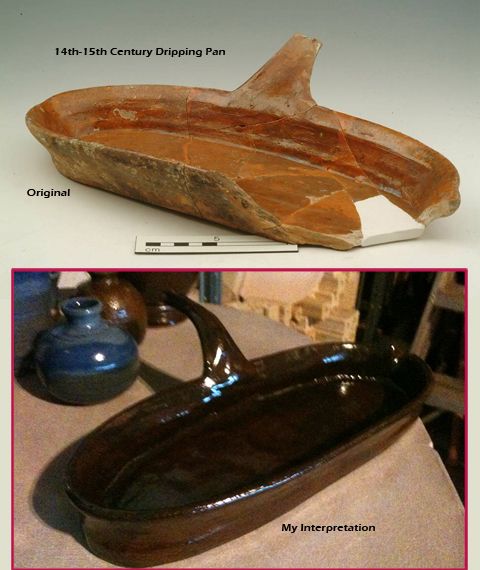
14th-mid 15th century Dripping Dish

I'm always trying to find new things to make that are unique. This is a new form for me and it's hand building, which gets me to use different skills for a change.

Details on this item from the Museum of London over here.

dish; dripping dish
Accession number: 23053
Collection place: Hertfordshire
Production date: Late Medieval; mid 14th-mid 15th century
Material: ceramic; earthenware
Measurements: H 44 mm; L 301 mm; W 240 mm
Museum Section: Medieval
Summary: Reconstructed Late Medieval Hertfordshire Glazed ware dripping dish, with pinched pouring lip at complete end, straight strap handle in centre; almost complete.
Location: Object stored at Mortimer Wheeler House (Ceramics and Glass store)
Category: Medieval glazed ware.
Sub-category: Late Hertfordshire glazed ware.

I took a horrible picture of my final dish. If it doesn't sell, I will try to retake the dish again and do this shot over. I made a decision that there was only one pouring spout as the other side was broken, but it could have just as easily been on both sides.
Labels: , , , ,

Wednesday, December 15, 2010

Pipkins and Late Medieval cooking

While being a potter and being in the SCA, a number of people seem to want the "pipkin," however, I believe they may feel that the pipkin automatically comes with three "feet" or legs. Not the case.

In history, cook pots come in all shapes and sizes. The tripod pipkin, does indeed, comes with three legs (stands or short rods, if you will that are attached to the bottom of the pot, balancing the vessel). There are also skillets and a variety of pots for cooking as one could imagine looking at our cooking stores.

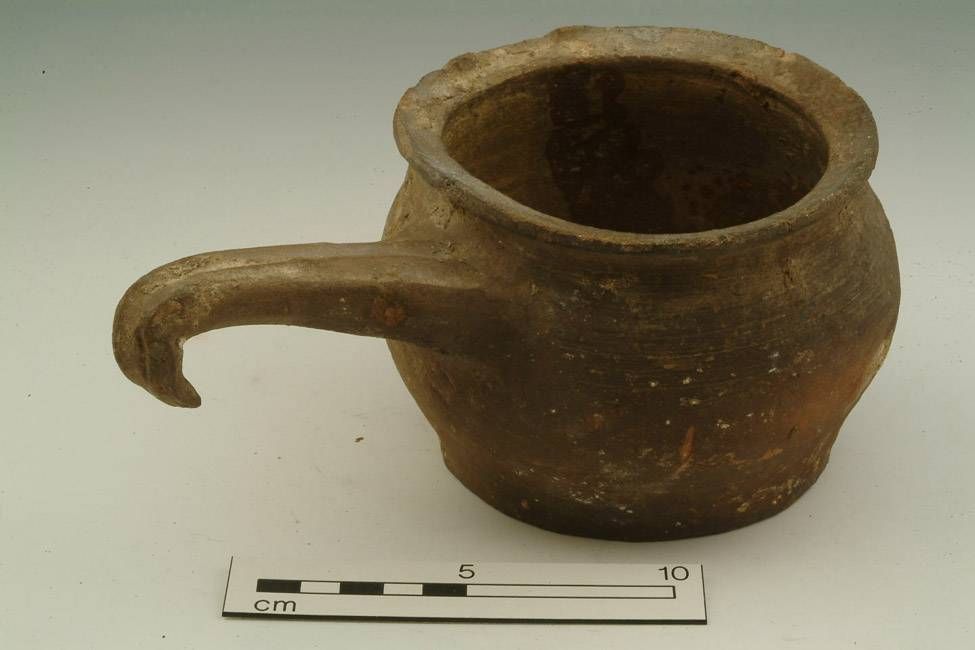
Here is a sample of a standard pipkin, with a pinched pouring lip and pulled handle.

Accession number: A20607
Collection place: London
Production date: Late Medieval; 15th century
Material: ceramic; earthenware
Measurements: H 97 mm; DM (rim) 132 mm; W (with handle) 207 mm.
Museum Section: Medieval
Summary: Complete Late London-type ware pipkin with pinched pouring lip, and thin, clear glaze inside and out.
Location: Object stored at Mortimer Wheeler House (Ceramics and Glass store)
Category: Medieval glazed ware.
Sub-category: London-type ware.

Labels: , , ,

Tuesday, December 07, 2010

Cooking in Late Medieval England

Cooking really hasn't changed all that much over the centuries. A good shape, once it is figured out, is used culture to culture, for hundreds of years. It is particularly true with the cookpot. Styles and decorations may come and go, but for the most part, the roundness and basic shape really is stand from early BC until even now.

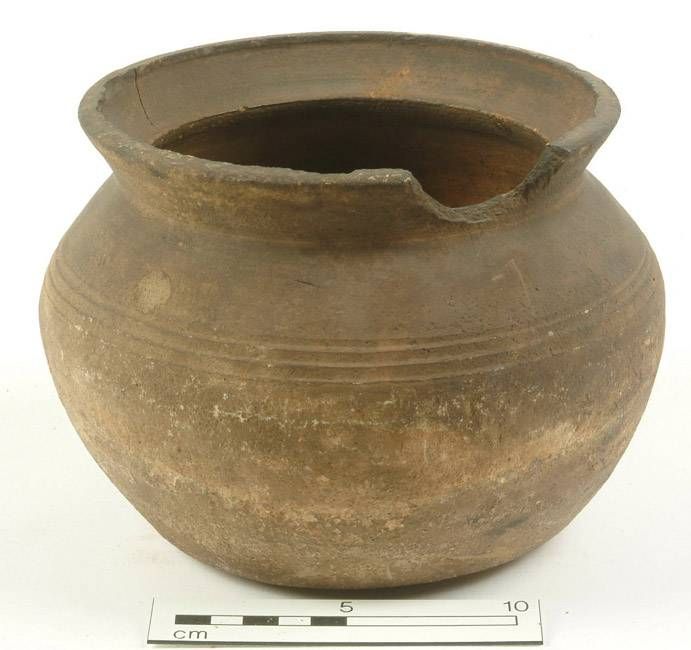
Since I am just showing samples of Late Medieval England right now, here is a "jar" or a cook pot.

Details as follows:

Accession number: 5821
Collection place: Hertfordshire
Production date: Late Medieval; mid 14th-mid 15th century
Material: ceramic; earthenware
Measurements: H 143 mm; DM (rim) 165 mm
Museum Section: Medieval
Summary: Late Medieval Hertfordshire Glazed ware (2419) cooking pot.
Location: Object stored at Mortimer Wheeler House (Ceramics and Glass store)
Category: Medieval glazed ware.
Sub-category: Late Hertfordshire glazed ware.

Labels: , , ,

Friday, November 26, 2010

What every Medieval kitchen needs: The Jug

The kitchen is more than cookpots. In a kitchen, one needs storage jars for all those ingredients to keep them dry. Colanders, mortar and pestles for crushing, bowls for mixing, and serving plates. There wasn't running water in the house (well, unless the roof was leaking, which is bad) so, having jugs to go gather water from the well or nearest water source was a good thing to have.

The jug was a multi-tasker. It not only brought water into the home for cooking, but it could also hold other liquids (ale, wine, broth, soups, etc) both hot and cold. One can also use it to fill a tub for the yearly bath (in some cultures) or help do the washing. Some people used jugs to drink directly from while others used as pitchers. Some had pinched spouts, while others didn't. And it isn't a surprise by it's versatility that there are so many jugs of so many sizes and shapes found in digs.

I'll be posting a number of Jugs to show a few examples in the future.

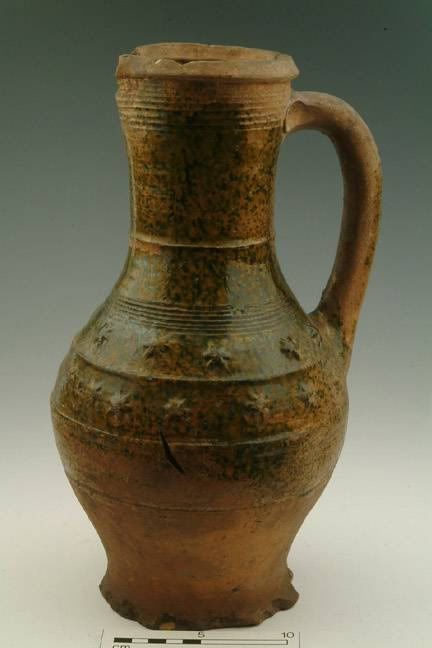
Accession number: A15259
Collection place: Hertfordshire
Production date: Late Medieval; mid 14th-mid 15th century
Material: ceramic; earthenware
Measurements: H 330 mm
Museum Section: Medieval
Summary: Late Medieval Hertfordshire Glazed ware baluster jug with green glaze, stabbed handle and stamped boss decoration in the form of stars.
Location: Object stored at Mortimer Wheeler House (Ceramics and Glass store)
Category: Medieval glazed ware.
Sub-category: Late Hertfordshire glazed ware.

Labels: , , , ,

Cookware in Late Medieval England

As I research pots to make, I figured I would post a few of the more interesting I come across in a series.

I have many pottery books I've collected over the years, but I tend to look over the Museam of London's online collection a lot. I do this because of their variety as well as they tend to add stuff, which to me, is fairly exciting if it is a new shape or new item that they haven't had up before.

One of the first ceramic objects I am posting is a dripping dish. Details below:

Accession number: 23053
Collection place: Hertfordshire
Production date: Late Medieval; mid 14th-mid 15th century
Material: ceramic; earthenware
Measurements: H 44 mm; L 301 mm; W 240 mm
Museum Section: Medieval
Summary: Reconstructed Late Medieval Hertfordshire Glazed ware dripping dish, with pinched pouring lip at complete end, straight strap handle in centre; almost complete.
Location: Object stored at Mortimer Wheeler House (Ceramics and Glass store)
Category: Medieval glazed ware.
Sub-category: Late Hertfordshire glazed ware.


Looking at this, to me, it looks like the other side that is broken, may have had a pinched pouring lip as well, but I would have to look at a few other examples to make sure they were made in production like that. I think that it had one because it looks a little thicker before the break, preparing for that.

I found an interesting account of dripping dishes and use at Pennsic 2009 (as well as cooking at Pennsic, which was the main point of the article) over here.

Labels: , , , ,


 TOP 

©2002-8 Mercy Neumark. All Rights Reserved.
No part of this website may be reproduced without express written permission of the author.
RakuRakuTei.com | P.O.Box 9957, Canoga Park, CA 91309 |
mercy@rakurakutei.com