Animal and Human Faces in English Pottery
Sculpting animals and human faces onto pots has been going on since the dawn of time. It's not surprising to see it on pots from around the world.
Here are some 13th-14th century English examples of jugs that have anthropomorphic and human qualities to them.
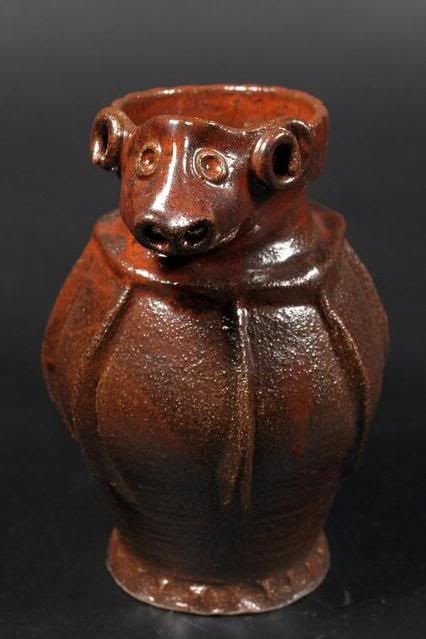
Ram's Head jug.
There are holes in the nostrils so that liquid pours out through them. And yes, this is completely historically correct and disgusting at the same time. Think about Gothic gargoyles on Churches and you have the same principle. Jugs with mouths open, pitchers holding water in the form of animals called Aquamaniles, were used throughout the Middle Ages.
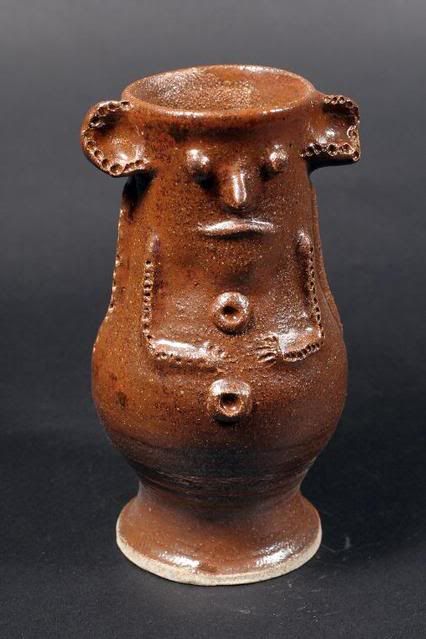
Gentleman Jug... heh.
I originally was going to name him man jug, but that sounded wrong. I don't know what he was called. I only have a cut out picture of him. I do believe he might have been a soldier, but this is a guess. There is a lot of clay manipulation on him, both attaching parts and pushing out to sculpt out his chin and cheeks.
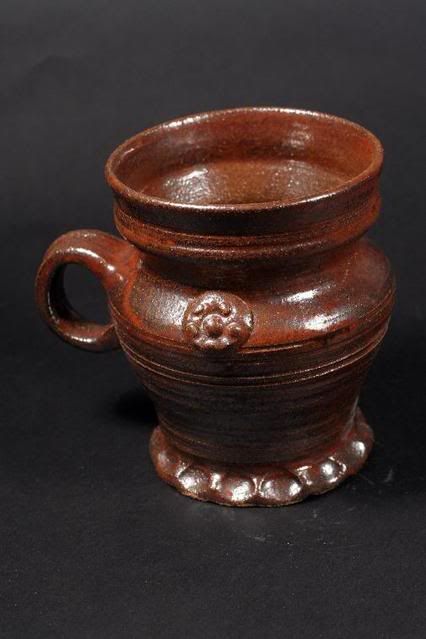
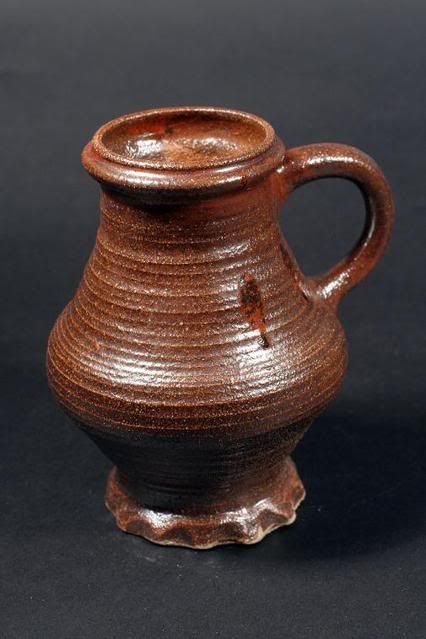
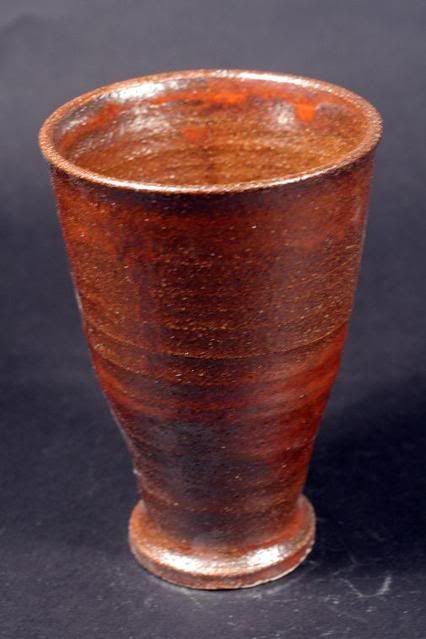
These are just my more recent ones.
Here are some 13th-14th century English examples of jugs that have anthropomorphic and human qualities to them.
Ram's Head jug.
There are holes in the nostrils so that liquid pours out through them. And yes, this is completely historically correct and disgusting at the same time. Think about Gothic gargoyles on Churches and you have the same principle. Jugs with mouths open, pitchers holding water in the form of animals called Aquamaniles, were used throughout the Middle Ages.
Gentleman Jug... heh.
I originally was going to name him man jug, but that sounded wrong. I don't know what he was called. I only have a cut out picture of him. I do believe he might have been a soldier, but this is a guess. There is a lot of clay manipulation on him, both attaching parts and pushing out to sculpt out his chin and cheeks.
These are just my more recent ones.
Labels: anthropomorphic, aquamaniles, english, history, jug, jugs, man, mug, mugs, pitcher, ram, ramshead
posted by Mercy at
3:45 PM